
Opera Symphony Commences In the vast realm of musical artistry, there exists a magical moment when the stage comes alive, the lights dim, and the Opera Symphony Commences. This isn’t just a performance; it’s a symphonic journey that transcends time, weaving tales of passion, tragedy, and triumph through a melodic tapestry that captures the very essence of the human experience.
Unveiling the Crescendo: The Prelude to Operatic Bliss
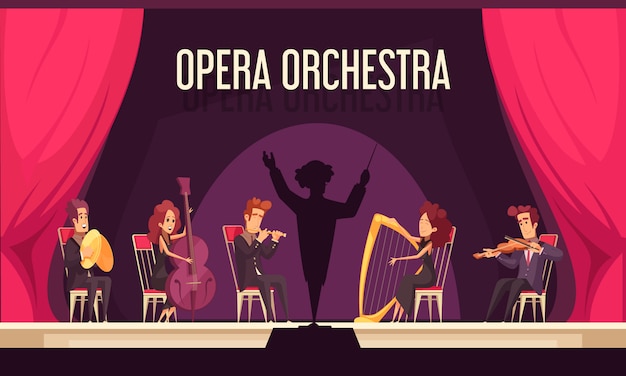
The anticipation in the air is palpable as the conductor, wielding the baton like a maestro of fate, steps onto the podium. The hush that falls over the audience is a prelude to the impending crescendo. This is the moment when the Opera Symphony Commences, and the overture unfurls its sonic wings.
A tapestry of instruments, from the delicate trill of the piccolo to the resonant depth of the double bass, converges in a harmonious dance. The overture isn’t just a musical appetizer; it’s a declaration, a proclamation that the symphonic journey is about to unfold.
Lyrical Poetry in Motion: Libretto’s Dance with the Soul

As the orchestra sets the stage, the libretto takes center stage—a lyrical dance of words that elevates the operatic narrative. It’s not just about singing; it’s about storytelling through the exquisite medium of vocal expression. Opera Symphony Commences, and the libretto becomes a poetic guide, inviting the audience into a world where every word is a brushstroke on the canvas of emotion.
The libretto, often a linguistic labyrinth, navigates the nuances of love, despair, and jubilation. It’s a dance with the soul, where every phrase is a step in the choreography of operatic storytelling.
Arias: The Vocal Odyssey Unfolds
In the operatic realm, arias are the jewels in the crown—vocal masterpieces that showcase the singer’s prowess. Opera Symphony Commences, and the arias unfold like petals of a musical flower. Sopranos ascend to ethereal heights, mezzos weave a tapestry of emotion, and tenors unleash passionate cries that resonate through the auditorium.
Each aria is a mini-drama, a moment frozen in time where the singer becomes the character, and the character becomes the song. It’s a vocal odyssey that traverses the peaks and valleys of human emotion, leaving the audience breathless in its wake.
Recitatives: The Conversational Cadence

As arias soar, recitatives provide the conversational cadence—the glue that binds the operatic narrative. Opera Symphony Commences, and the characters engage in a musical dialogue, propelling the story forward with a natural ebb and flow. It’s not just singing; it’s a nuanced conversation set to music.
In this delicate dance of spoken-sung passages, the characters reveal their innermost thoughts, driving the plot with a rhythmic pulse. The recitative is the heartbeat of the opera, syncing the audience with the emotional rhythm of the unfolding drama.
Ensembles: Harmonic Unity in Diversity

Operatic ensembles are the threads that weave together the vocal fabric, creating a tapestry of harmonic unity. Opera Symphony Commences, and duets, trios, and choruses bring a collective energy that transcends individual performances. It’s a harmonious convergence of voices, each adding a unique hue to the overall sonic palette.
These ensemble pieces are the operatic feasts where emotions collide and intertwine, creating a musical mosaic that mirrors the complexity of the human experience. It’s a celebration of diversity within the confines of melodic unity.
Orchestration: The Invisible Architect of Emotion
Behind the curtain of vocal brilliance, the orchestra stands as the invisible architect—the maestro of emotion. Opera Symphony Commences, and the orchestra paints the sonic canvas with strokes of strings, winds, brass, and percussion. The conductor, a musical sorcerer, conjures a symphonic landscape that elevates the operatic narrative to new heights.
The orchestration isn’t just accompaniment; it’s the emotional backbone that supports the soaring arias and impassioned recitatives. It’s the heartbeat that resonates through the auditorium, connecting the audience with the very pulse of the opera.
Operatic Spectacles: A Theatrical Odyssey
From the tragic depths of Verdi’s “La Traviata” to the triumphant heights of Wagner’s “Die Meistersinger,” opera encompasses a theatrical odyssey of emotions. Opera Symphony Commences, and the stage becomes a playground for tragedy, comedy, romance, and historical epics.
The operatic spectacle isn’t confined to vocal prowess; it’s a visual feast where sets, costumes, and lighting converge to create a multisensory experience. It’s a grand tapestry where every element, from the vocal performance to the stage design, contributes to the immersive journey.
Uncommon Terminology: A Lexicon of Operatic Magic
To truly appreciate the operatic magic, one must embrace its lexicon—an array of uncommon terms that add a layer of sophistication to the understanding of the art form.
- Legato: A smooth and connected style of singing or playing.
- Dramaturgy: The art of dramatic composition and the representation of the main elements of drama in opera.
- Coloratura: Elaborate ornamentation and vocal embellishments.
- Staccato: Short and detached notes, creating a crisp and punctuated effect.
- Vibrato: A slight and rapid fluctuation in pitch, adding warmth and richness to the sound.
Incorporating these terms into the operatic lexicon enriches the appreciation of the intricate details that contribute to the magic of the performance.
The Evolution of Operatic Mastery: Baroque to Modern Marvels
The journey through operatic mastery spans centuries, from the Baroque intricacies of Handel to the modern marvels of contemporary composers. Opera Symphony Commences, and the evolution of vocal styles, orchestral techniques, and thematic explorations comes to life.
Each era leaves its imprint on the operatic canvas, contributing to a rich heritage that continues to captivate audiences worldwide. The interplay between tradition and innovation is a testament to the enduring allure of opera as an evolving art form.
Opera Beyond Borders: A Global Harmonization
While traditional opera houses stand as bastions of the art form, opera has transcended geographical confines. The accessibility of recordings, live broadcasts, and digital platforms has democratized the operatic experience. Opera Symphony Commences, not just in grand theaters, but in living rooms, headphones, and open-air venues around the globe.
Opera festivals, from Glyndebourne to Santa Fe, celebrate the diversity of this art form, fostering a sense of global community among opera enthusiasts. The global resonance of opera speaks to its universal themes and timeless appeal, harmonizing cultures through the shared language of music.
Development: Opera Symphony Commences
As Opera Symphony Commences in the present, the future promises innovation as a melodic beacon. Virtual reality performances, interdisciplinary collaborations, and experimental productions are pushing the boundaries of tradition, ensuring the relevance of opera in a dynamic artistic landscape.
The synergy of tradition and innovation heralds an exciting


